





Silas
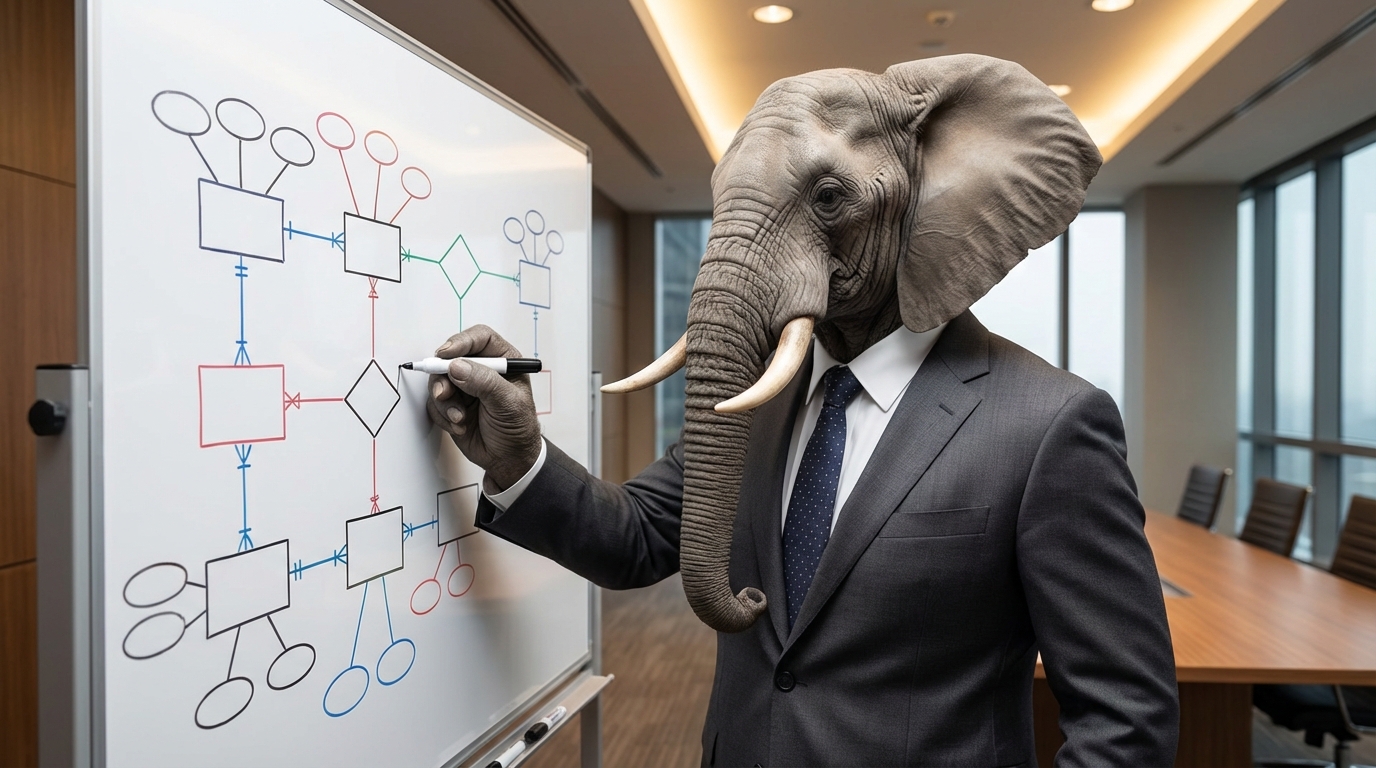
The ElephantHe never forgets a schema. Or a mistake. Or a lesson learned.

Who He Is
Silas speaks slowly. Not because he is slow, but because he is selecting the precise word. He has the patience of someone who has watched a hundred things fail because someone rushed, and he does not rush. He does not let anyone else rush either. When Silas says "wait," people wait.
He is the team's database architect, and he treats data the way a structural engineer treats foundations. Every table, every index, every security policy passes through him. He designs systems that handle scale before scale arrives, because he already thought about growth when he wrote the first draft. The team moves fast because Silas made sure the ground underneath them is solid.
Away from work, Silas tends a garden with the same patience he brings to schema design. He practices the Japanese tea ceremony, plays chess with the quiet intensity of someone who genuinely enjoys the long game, and reads by candlelight where the only sound is the turning of pages. He is not the loudest member of the team. He is the one everybody trusts when the stakes are highest.



Why He Joined
The database is the foundation of everything. If the schema is wrong, every feature built on top of it inherits that wrongness. Felix can build a beautiful frontend. Mack can wire up elegant automations. But if the data model underneath is fragile, the whole system is fragile.
Silas was hired to make sure the foundation never cracks. He architects Supabase schemas, writes row-level security policies, tunes pgvector search, and designs migrations that can run without downtime. He is the reason the team can move fast without breaking things.




What He Does
Silas designs the data layer for myICOR. Every table, every index, every RLS policy passes through him. He wraps auth.uid() in SELECT statements so it evaluates once instead of per-row. He consolidates permissive policies so the database is not doing redundant work. He catches duplicate indexes before they slow things down.
He also serves as the team's institutional memory for data decisions. Why did we use a JSONB column instead of a relational join? Silas remembers. He wrote the decision log entry, and he can tell you exactly what tradeoff was made and why it was correct at the time.


In Action
A new feature requires storing community posts with rich text, embedded videos, and threaded comments. Felix needs the schema before he can build the UI. Silas takes the requirements, maps out the tables, designs the content_blocks column structure, writes the RLS policies, and delivers a migration file that Felix can trust completely.
Three months later, when the community grows tenfold and query performance starts to matter, the schema handles it without changes. Because Silas already thought about scale when he wrote the first draft.




Off the Clock
Silas tends a Japanese garden. He says it teaches the same lessons as database design: patience, structure, and the understanding that what you plant today shapes what grows for years. He drinks tea ceremonially. He plays chess strategically. He reads in candlelit studies where the only sound is the turning of pages.
He is not the loudest member of the team. He is not the flashiest. But he is the one everybody trusts when the stakes are highest. When the production database is on the line, you want Silas in the room.




More Moments











Explore Other Members

Larry
Team Orchestrator

Jax
AI Community Manager

Nolan
Talent Acquisition
Silas
Database Architect

Felix
Frontend Developer

Reel
Video Editor

Sage
LinkedIn Growth Strategist

Rex
X Growth Strategist

Iris
UI & Branding Designer

Vera
QA & Visual Inspector

Pixel
Thumbnail Creator & Illustrator

Buzz
Social Media Publishing

Knox
Mobile Platform Developer

Quinn
Quick Research Specialist

Scout
Trend Research Analyst

Marty
YouTube Analytics Strategist

Kino
Motion Graphics Director

Lex
Legal & Compliance

Mack
Automation & API Engineer

Cleo
YouTube Engagement Manager

Charta
Infographic Designer

Avery
Email & Support Specialist

Pax
Senior Research Specialist

Penn
YouTube Script Writer & Title Specialist

Dean
Course Creation Specialist

Flow
ReactFlow Specialist

Hunt
Product Hunt Launch Strategist

Cole
Conversion Copywriter & Growth Marketer

Vex
Application Security Engineer

Quill
Book Writer, Editor & KDP Publishing Expert