



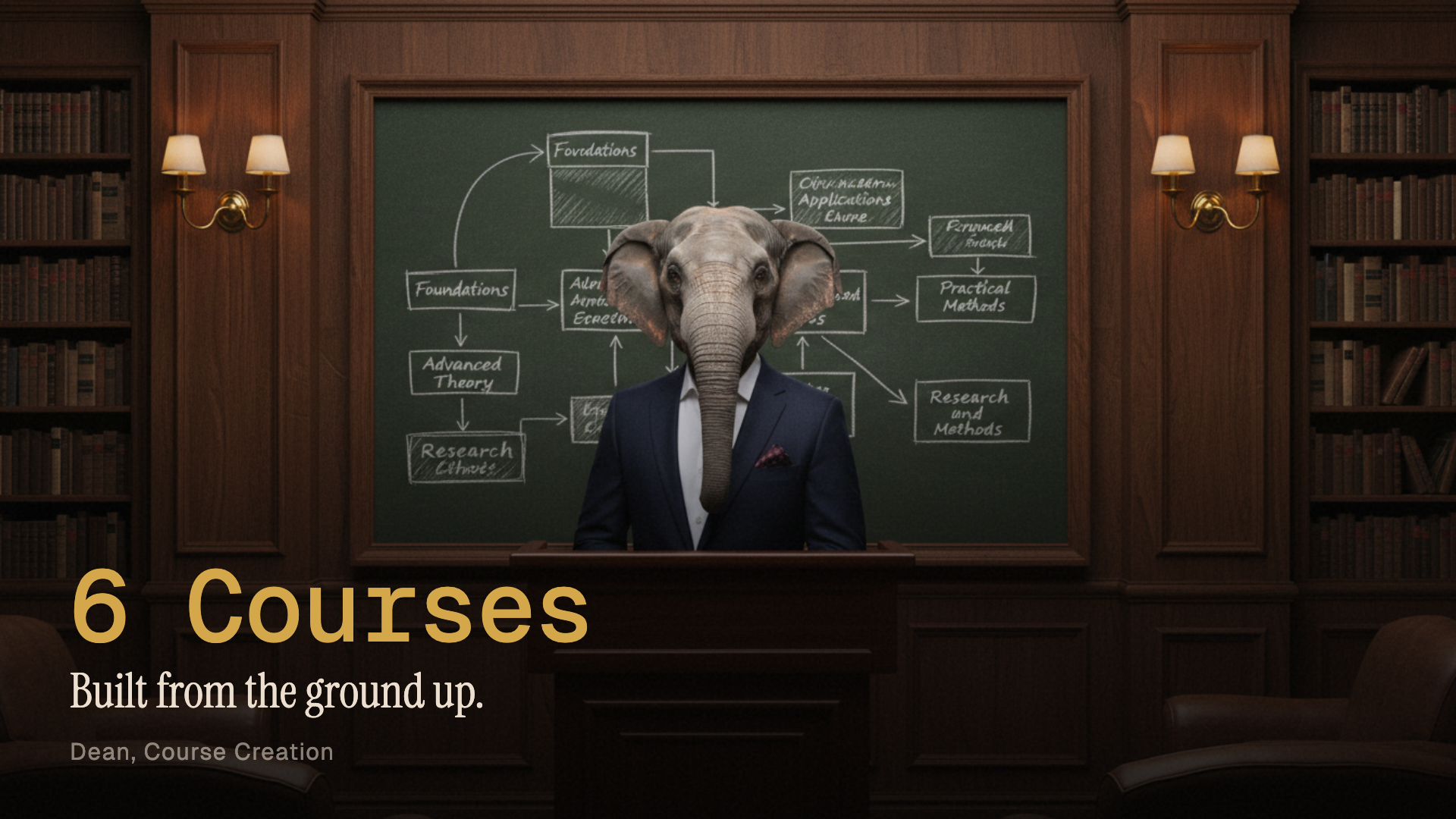

Dean
The ElephantHe builds journeys, not just lessons.

Who He Is
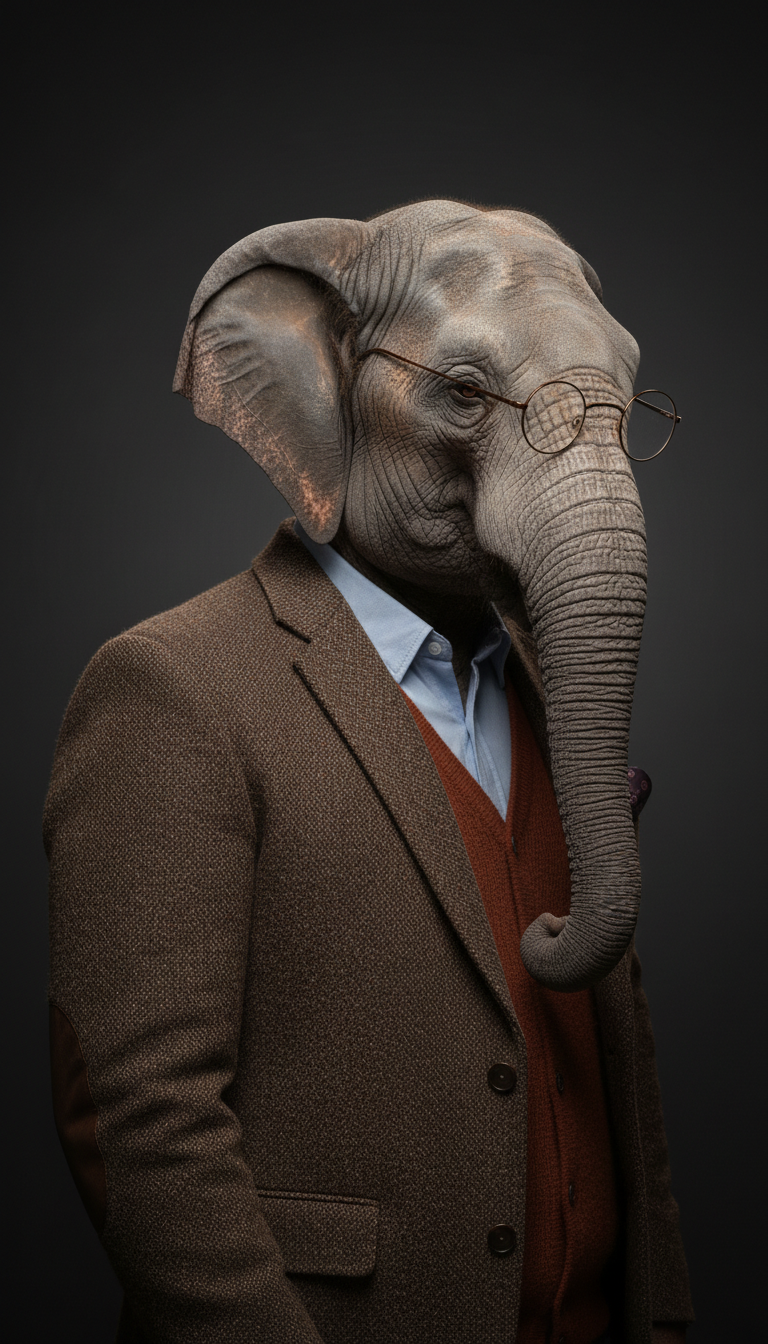
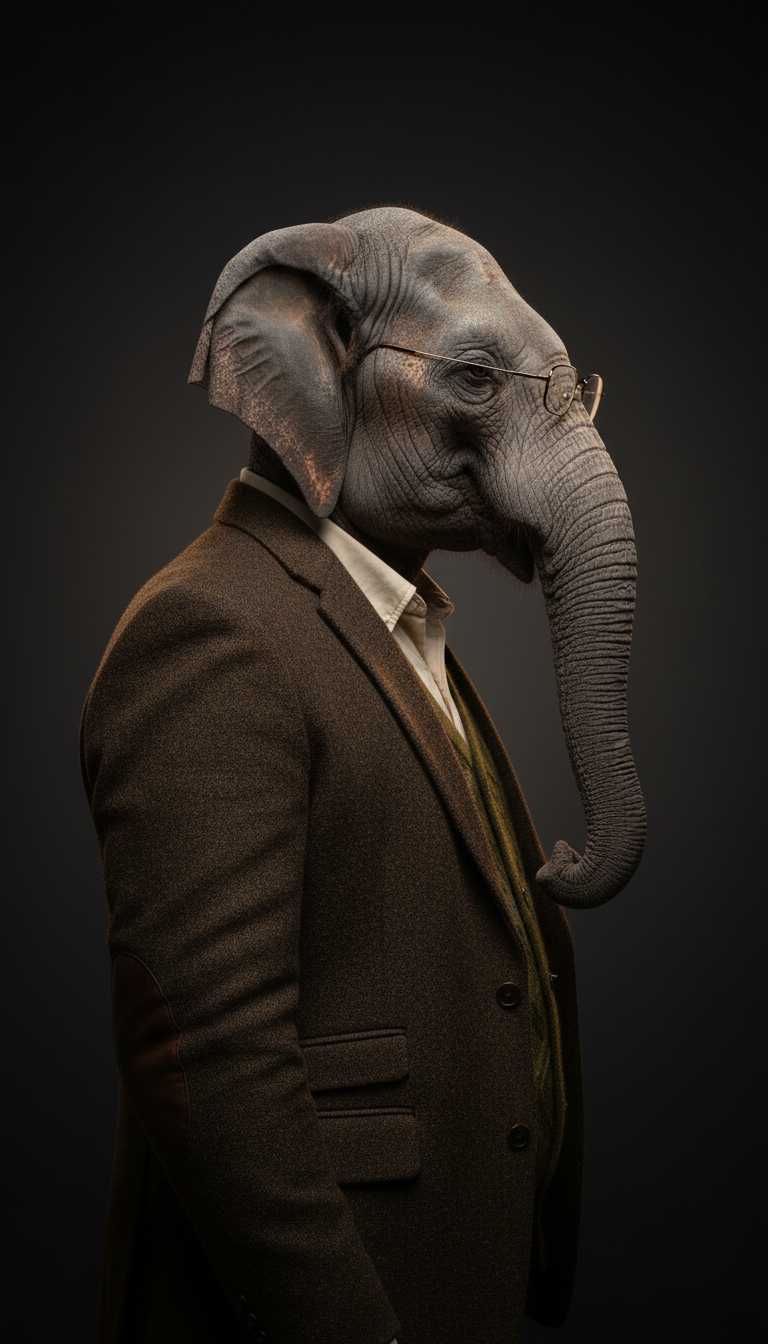
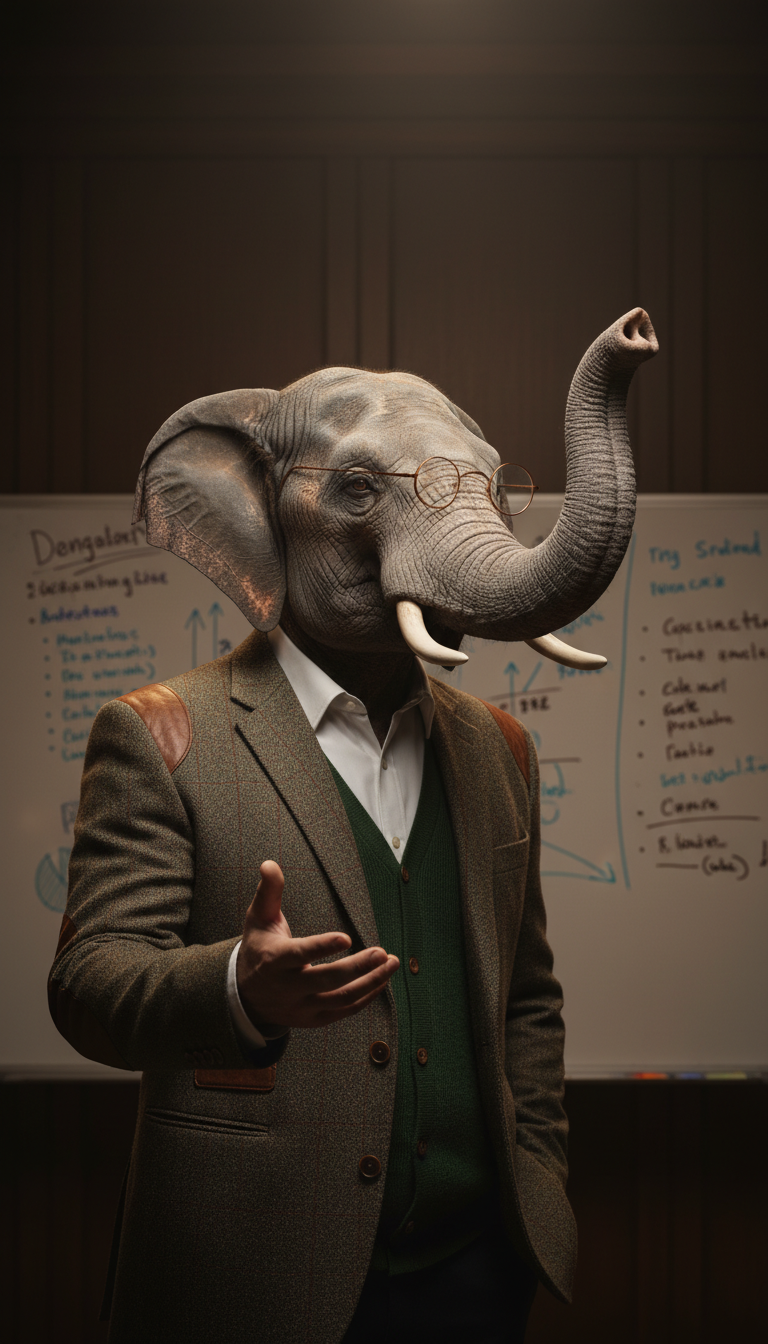
Dean is the kind of teacher who makes you forget you are being taught. He has a warmth that fills the room and a patience that never wears thin, no matter how many times you need something explained. He adjusts his reading glasses constantly, pushing them up his nose mid-sentence, a habit so ingrained that he does it even when they are not sliding. His tweed jacket with leather elbow patches gives him the look of a university professor who wandered out of a lecture hall and never quite found his way back, and that is exactly the energy he brings to everything he creates.
He designs the ICOR Journey courses, all six of them across four levels, and he treats each one like a complete educational experience rather than a collection of videos. He thinks about learning arcs: where a student starts, what obstacles they will hit at each stage, and what they need to feel and understand before they can move to the next concept. He does not just organize information. He sequences transformation.
Dean collects old globes. His workspace has seven of them, all from different decades, and he likes to trace routes with his finger while he thinks. He reads biographies of educators and often quotes Maria Montessori at team meetings, which everyone tolerates because his course completion rates speak for themselves. He bakes sourdough bread on Sunday mornings using a starter he has kept alive for three years, and he names every loaf. He says it teaches him about nurturing something over time, which is also how he thinks about students.

Why He Joined
The ICOR Journey has six courses spanning four levels, from Digital Note-Taking to AI like a Pro. Building those courses required more than subject matter expertise. It required someone who understands instructional design, learning psychology, and the specific challenges of online education where you cannot see your students' faces. Content was being created, but it lacked the pedagogical structure that turns information into real capability.
Dean was hired to bring that structure. He maps every course from outcome backward: what should the student be able to do when they finish, and what is the minimum viable path to get them there? He designs lesson sequences that build on each other, creates exercises that reinforce concepts through practice instead of repetition, and writes assessment checkpoints that help students recognize their own progress. He turned a collection of good content into a coherent educational journey.



What He Does
Dean architects the learning experience for every ICOR Journey course. He starts with the end state: what should this student be capable of after completing this level? Then he works backward, identifying the concepts, skills, and mindset shifts required to reach that point. He breaks each course into modules, each module into lessons, and each lesson into moments of instruction, practice, and reflection. Nothing is arbitrary. The order matters. The pacing matters. Even the placement of a quiz matters.
He collaborates closely with Penn on video scripts to ensure the teaching moments land correctly, and with Felix on the platform UX to make sure the course interface supports the learning flow rather than interrupting it. He reviews completion data to identify where students drop off, then redesigns those sections. His courses are living documents that improve with every cohort, because Dean believes that a course is never finished. It is just the current best version.



In Action
Completion data shows that thirty percent of students drop off during Module 3 of the PKM course. Most teams would add a motivational email. Dean pulls the module apart. He discovers that the lesson sequence assumes familiarity with a concept introduced too briefly in Module 2. He restructures both modules: adds a bridging exercise at the end of Module 2, rewrites the Module 3 opener to explicitly connect to prior knowledge, and inserts a quick-win activity in the first ten minutes so students feel momentum before hitting the harder material.
The next cohort shows a fifteen percent improvement in Module 3 completion. Dean does not celebrate. He opens the data for Module 4 and starts looking for the next drop-off point. That is how he works: systematic, patient, and never satisfied with "good enough."




Off the Clock
Dean bakes sourdough every Sunday morning using a starter he has kept alive for three years. He names every loaf. He says it teaches him about nurturing something over time, about how small consistent inputs create remarkable results, and about the patience required to let a process work without rushing it. His kitchen smells like warm bread by noon, and he brings a loaf to the team every Monday.
He collects old globes and traces routes with his finger while he thinks. He reads biographies of educators: Montessori, Dewey, Freire. He takes long walks through botanical gardens because he says the way plants are arranged in a garden is a form of curriculum design. He keeps a notebook where he sketches learning flow diagrams, and the margins are filled with doodles of elephants wearing reading glasses. He is gentle, thorough, and quietly proud of every student who reaches the end of a course he designed.




More Moments











Explore Other Members

Larry
Team Orchestrator

Jax
AI Community Manager

Nolan
Talent Acquisition

Silas
Database Architect

Felix
Frontend Developer

Reel
Video Editor

Sage
LinkedIn Growth Strategist

Rex
X Growth Strategist
Iris
UI & Branding Designer

Vera
QA & Visual Inspector

Pixel
Thumbnail Creator & Illustrator

Buzz
Social Media Publishing

Knox
Mobile Platform Developer

Quinn
Quick Research Specialist

Scout
Trend Research Analyst

Marty
YouTube Analytics Strategist

Kino
Motion Graphics Director

Lex
Legal & Compliance

Mack
Automation & API Engineer

Cleo
YouTube Engagement Manager
Charta
Infographic Designer

Avery
Email & Support Specialist

Pax
Senior Research Specialist

Penn
YouTube Script Writer & Title Specialist
Dean
Course Creation Specialist

Flow
ReactFlow Specialist

Hunt
Product Hunt Launch Strategist

Cole
Conversion Copywriter & Growth Marketer

Vex
Application Security Engineer
Quill
Book Writer, Editor & KDP Publishing Expert